5 Iron-Rich Foods to Eat Before You Donate Blood
Ensure your hemoglobin levels are in top shape and make your next blood donation a breeze with these simple dietary additions.
❝"A single blood donation can save up to three lives, but taking care of your own body first is the crucial first step in the journey of giving."
Whether you are a first-time donor or a seasoned regular, taking care of your body before giving blood is essential. One of the most common reasons people are temporarily deferred from donating is low hemoglobin—an iron-rich protein in your red blood cells that carries oxygen throughout your body.
To ensure your levels are high enough for a safe and successful donation, incorporating iron-rich foods into your diet in the weeks leading up to your appointment is highly recommended.
Here are five excellent iron-rich foods to add to your meals:
1. Lean Meats and Poultry
The iron found in animal products, known as heme iron, is the easiest type for your body to absorb. Lean beef, turkey, and chicken are excellent sources. If you consume meat, adding a moderate portion of lean poultry or beef to your dinners a few days prior to donation can give your hemoglobin a solid boost.
2. Spinach and Dark Leafy Greens
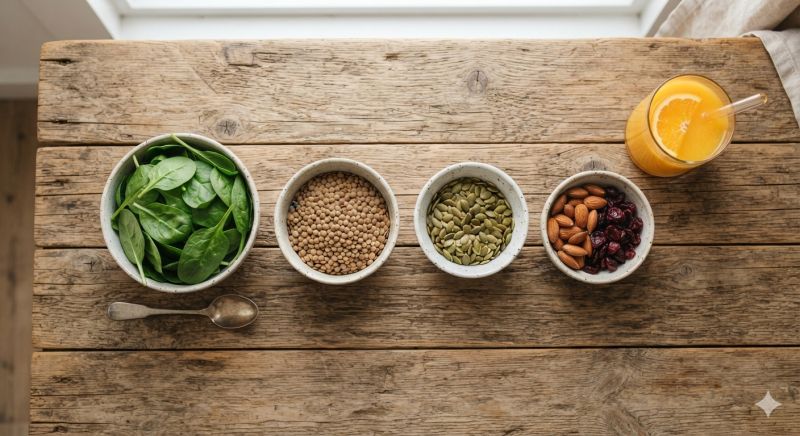
For plant-based diets, dark leafy greens like spinach, kale, and Swiss chard are nutritional powerhouses. While they contain non-heme iron (which is slightly harder for the body to absorb on its own), they are incredibly versatile.
3. Lentils and Beans
Legumes are not only budget-friendly but also packed with non-heme iron, protein, and fiber. A warm bowl of lentil soup or a hearty black bean salad is a perfect pre-donation meal that keeps your energy stable and your iron levels up.
4. Pumpkin Seeds
Looking for a quick snack? A handful of roasted pumpkin seeds (pepitas) provides a surprisingly high amount of iron. Sprinkle them over your morning oatmeal, mix them into yogurt, or simply eat them raw as a midday energy booster.
5. Iron-Fortified Cereals
Many breakfast cereals are fortified with essential vitamins and minerals, including iron. Checking the nutrition label on your favorite whole-grain cereal can help you identify a quick, easy morning meal that helps you hit your daily iron target.
Bonus Tip: Don't Forget Vitamin C! If you are relying on plant-based (non-heme) sources of iron, your body needs a little help absorbing it. Pair your iron-rich foods with Vitamin C-rich options like oranges, strawberries, bell peppers, or tomatoes. For example, a glass of orange juice with your fortified cereal or tomatoes in your spinach salad can significantly increase your iron absorption.
By making a few simple tweaks to your diet, you can maintain healthy iron levels, feel great during your appointment, and help save lives!